Health and Safety Policy for Home Cleaners
Purpose: This policy sets out a clear statement of intent to protect the health, safety and welfare of domestic cleaning staff, homeowners and household visitors. It applies to all residential cleaning operatives, including part-time and full-time home cleaners, residential cleaners and house cleaning professionals who work in private homes or residential settings. The aim is to reduce risk, prevent injury and promote an environment where safe cleaning practices are routine.Scope and Responsibilities
All members of the home cleaning team must understand their duties. The duties include carrying out safe cleaning tasks, reporting hazards and cooperating with safety measures. Managers and supervisors are responsible for maintaining safe equipment and systems for scheduling tasks in a way that does not compromise safety. Every home cleaner should know who to contact internally for advice and how to record incidents.![A close-up view of a kitchen sink area in a home, featuring a stainless steel sink with a modern chrome faucet. A blue plastic bucket is placed inside the sink, and a person wearing pink rubber gloves is using a yellow cloth to wipe the sink's surface. The background includes a tiled backsplash in neutral tones and a countertop with cleaning supplies, such as a purple spray bottle. The scene is well-lit, highlighting the clean and tidy condition of the kitchen, which is representative of regular domestic cleaning services provided by companies like Home Cleaners in the vicinity of [TOWN] or [POSTCODE]. The focus on surface preparation and cleaning tools subtly emphasizes professional attention to hygiene and sanitation standards in residential kitchens within the UK.](/pub/_photos/cleaning/f1437034384.jpg)
Risk Assessment and Hazard Control
A simple, practical risk assessment process should be in place for each property and for recurring duties. Key hazards to consider are chemical exposure, manual handling, slips and trips, electrical equipment, sharps and exposure to biological agents. Assessments must be documented and communicated. Actions should include avoiding unnecessary risks, substituting hazardous products, and implementing controls such as PPE and safe work methods.Personal Protective Equipment and Equipment Use
Personal protective equipment must be provided where risks cannot be eliminated. Typical PPE for domestic cleaning staff includes gloves, eye protection and suitable footwear. Training on correct use, maintenance and disposal of PPE is essential. Use of cleaning machines or ladders requires specific instruction and should only be carried out by those competent to use them.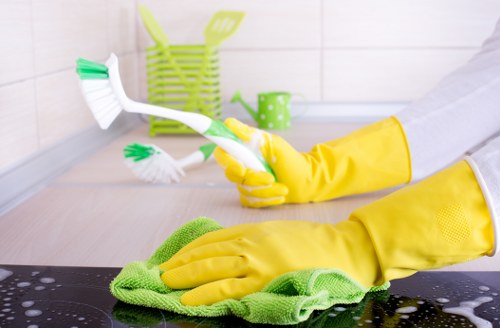
Chemicals, Cleaning Products and Safe Handling
Home cleaning teams should use products according to manufacturer instructions and avoid mixing cleaning chemicals. Store concentrated products securely and label them clearly. Where possible, choose lower-toxicity cleaners and fragrance-free options to protect sensitive occupants and cleaning operatives. Keep an up-to-date inventory of substances used in the property and make information about each product accessible to staff.Safe work methods and substitution are preferable to reliance on PPE alone. Consider using microfiber and steam-cleaning methods to reduce chemical use and the potential for irritation or respiratory effects among domestic cleaners and residents.
Manual Handling, Slips and Ergonomics
Manual handling training should be provided to reduce musculoskeletal injuries among home cleaning operatives. Use trolleys or lightweight equipment to limit lifting, and adopt techniques such as adjusting load heights and working with legs rather than the back. Prevent slips by keeping floors dry, using appropriate signage when surfaces are wet, and ensuring footwear is slip-resistant.Infection Control and Waste Management
Routine infection control measures are important for domestic cleaning staff. Wear appropriate gloves when handling waste or bodily fluids, change gloves between tasks, and practice correct hand hygiene. Waste must be segregated and secured according to property-specific arrangements; sharp items should be isolated and removed safely. Cleaners should be familiar with the correct method for laundering cleaning cloths and PPE to avoid cross-contamination. Training, Supervision and Competence All residential cleaners should receive initial induction and ongoing training that covers safe use of equipment, handling of chemicals, manual handling, infection control and emergency procedures. Supervision should include periodic observation of work, constructive feedback and record-keeping of training and competence assessments. Strong communication channels help reinforce safe behaviors and keep teams informed of any changes.
Incident Reporting and Emergency Procedures
Establish straightforward reporting processes for injuries, near-misses and unsafe conditions. Prompt reporting supports timely investigation and corrective actions. Emergency procedures should be clear and accessible, including steps to take for injury, fire or chemical exposure. In the event of an incident, stabilise the situation, provide first aid if trained, and follow escalation protocols.Monitoring, Review and Continuous Improvement
Regular review of practices, equipment and products helps to maintain a safe working environment. Conduct periodic checks of cleaning tools, PPE and task procedures. Feedback from house cleaning professionals and home cleaners should be gathered to inform improvements. Keep records of audits and reviews and act on findings to reduce risk and enhance wellbeing.Conclusion: A practical, well-communicated health and safety policy for home cleaners fosters safer homes and healthier workers. By combining sensible risk assessment, appropriate equipment, clear training and a culture of reporting, domestic cleaning staff and homeowners can maintain productive, safe cleaning operations while protecting health and property.