Insurance and Safety for Home Cleaners
 Home cleaners and domestic cleaning teams operate in private homes where safety and protection are as important as the cleaning itself. This page outlines the core elements of risk management and insurance that every reputable residential cleaning team should maintain. We explain why public liability insurance matters, how staff training reduces incidents, the role of PPE and the practical steps of a robust risk assessment process. Safety is integral to delivering a reliable house cleaning service and protecting customers and staff.
Public liability insurance for domestic cleaners is the backbone of financial protection when accidents happen in clients' homes. Public liability cover typically pays for injury to third parties and damage to a client's property caused by a cleaner's activities. For house cleaners and cleaning agencies that enter private residences, this policy reassures homeowners that they will not be left to face costly claims alone. Many clients look for this insurance before they book regular or one-off cleaning by residential cleaning teams.
![A person wearing blue rubber gloves is cleaning a glass surface, possibly a kitchen countertop or table, with a yellow microfiber cloth. The background shows a blurred, bright environment indicating natural light, with parts of a smiling face visible, suggesting a domestic setting. The glass surface appears clean and reflective, indicating regular maintenance by a cleaning service. The scene reflects attention to detailed cleaning, suitable for homes or small commercial spaces in the [TOWN] area. This image highlights professional cleaning practices promoted by companies like Home Cleaners, emphasizing the importance of hygiene and surface cleanliness in residential environments across the UK postcode region.](/pub/_photos/cleaning/f1296481968.jpg) When evaluating public liability policies, domestic cleaning providers should check key elements: the limit of indemnity, whether accidental damage to the client's belongings is included, and any exclusions for hazardous activities. It is important to ensure the policy covers employee activities, whether staff are self-employed or employed by the company. Clear documentation of insured status and policy numbers should be accessible to customers and staff, and any subcontractors should also have appropriate cover.
When evaluating public liability policies, domestic cleaning providers should check key elements: the limit of indemnity, whether accidental damage to the client's belongings is included, and any exclusions for hazardous activities. It is important to ensure the policy covers employee activities, whether staff are self-employed or employed by the company. Clear documentation of insured status and policy numbers should be accessible to customers and staff, and any subcontractors should also have appropriate cover.
Staff Training and Competency
Well-trained house cleaners are safer and more effective. Training should be ongoing rather than a single induction, and it should be tailored to the specific tasks a cleaner performs in residential settings. Topics often include safe ladder use for high-access cleaning, correct handling and dilution of cleaning products, manual handling techniques to avoid injury, and how to recognize and report hazards. Competency assessments and refresher sessions help maintain standards across the team.
![A person wearing yellow rubber gloves is cleaning a grey kitchen countertop using a blue sponge, holding a spray bottle filled with blue cleaning solution. The background shows a modern kitchen with white cabinets, a black pan on the stove, and a wooden chopping board. The countertop appears smooth and polished, with a clean and disinfected surface, indicative of professional cleaning standards. The natural light highlights the tidy space, reflecting effective cleaning practices typical of residential kitchen maintenance services in [POSTCODE], such as those offered by Home Cleaners. The scene emphasizes thorough surface cleaning and sanitization in a modern kitchen setting, aligning with professional cleaning service descriptions on the Insurance and Safety page of homecleaners.org.uk.](/pub/_photos/cleaning/f1297528392.jpg) Effective staff training also covers customer interaction and privacy. Home cleaners often work in intimate spaces where maintaining a client's dignity, safeguarding valuables, and respecting household routines is as important as physical safety. Training modules should include confidentiality, working efficiently around children and pets, and strategies to de-escalate potentially sensitive situations. Supervisors should observe new staff on the job until competency is proven.
Effective staff training also covers customer interaction and privacy. Home cleaners often work in intimate spaces where maintaining a client's dignity, safeguarding valuables, and respecting household routines is as important as physical safety. Training modules should include confidentiality, working efficiently around children and pets, and strategies to de-escalate potentially sensitive situations. Supervisors should observe new staff on the job until competency is proven.
Recruitment is part of the safety ecosystem: background checks, right-to-work verification where required, and clear written contracts reduce risk for both cleaning companies and clients. Ensure that all team members understand your policies on reporting accidents, near misses, and any concerns about customer environments.
Personal Protective Equipment (PPE) and Safe Workwear
PPE is a practical, visible commitment to safety for residential cleaning services. Suppliers of home cleaning should provide appropriate protective items, including gloves, eye protection for chemical use, non-slip footwear, and face masks where dust or aerosols are present. PPE must be the right size, well maintained, and replaced when damaged. Providing PPE is good practice, and it reinforces a culture of safety among domestic cleaners.
Proper use of PPE reduces the likelihood of injuries and contamination. A simple checklist for every job can remind staff to bring and wear the correct equipment. Employers should also instruct staff on safe glove removal to avoid cross-contamination and advise on laundering reusable workwear separately from personal clothing. Regular audits ensure PPE is being used consistently.
- Standard PPE for house cleaners: nitrile or latex-free gloves
- For chemical tasks: goggles and aprons
- For wet floors: slip-resistant footwear
- Optional: masks for dust and ventilation-limited spaces
Risk Assessment Process for Home Cleaners
Risk assessments are practical, evidence-based documents that identify potential hazards, evaluate who may be harmed, and set out control measures to reduce risk. For residential cleaning teams, common hazards include slippery floors, hazardous substances, awkward lifting, pets, and uneven steps. A simple, consistent assessment template helps cleaners and supervisors evaluate each job before work begins.
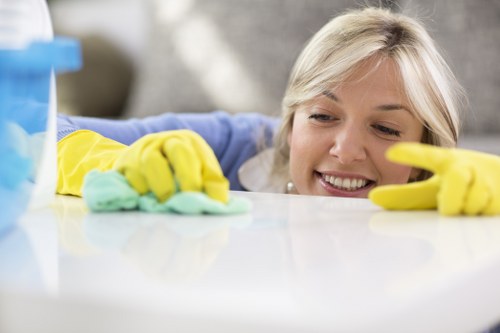 A basic risk assessment process should follow these steps: identify hazards, decide who may be harmed and how, evaluate existing controls, record findings, implement additional precautions if required, and review the assessment regularly. For recurring clients, assessments can be updated rather than recreated each visit, but any changes in the home environment must trigger a reassessment.
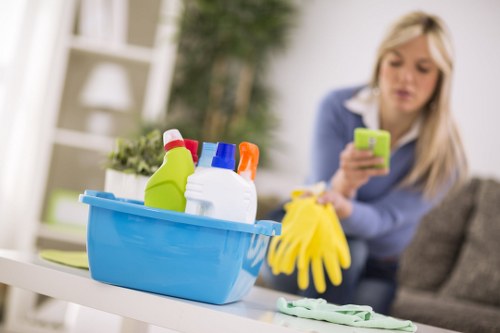 Documentation and incident reporting close the loop. Keep clear written records of risk assessments, training sessions, PPE distribution, and any accidents or near misses. Review patterns to improve procedures and insurance arrangements over time. Regular reviews and a proactive safety culture protect the reputation and financial stability of cleaning services and ensure clients receive a reliable, safe cleaning experience.
Commitment to Safety and Continuous Improvement
Whether you describe your workforce as home cleaners, domestic cleaning professionals or residential cleaning teams, the combination of appropriate public liability insurance, thorough staff training, correct PPE, and a systematic risk assessment process delivers dependable protection. Safety is a continuous process—not a single action—and documenting each step builds trust with clients while reducing the likelihood and impact of incidents. Prioritising these elements keeps both people and properties safe and enhances the quality of every cleaning service.